
- Home
- Tom Clancy
SSN Page 31
SSN Read online
Page 31
James Adams: What was your worst experience as a submariner?
Captain Doug Littlejohns: I think the worst experience was when I had water coming in when it shouldn’t have been coming in when I was pretty close to my maximum diving depth. But that was handled very nicely.
James Adams: What did you do?
Captain Doug Littlejohns: Well, we were in a place where we could surface in a hurry. And actually I was very impressed by the way people responded. They did all the right things in the right order at the right time.
James Adams: Has that always been your experience? There haven’t been occasions where people have said or done things that take it outside of the normal performance loop?
Captain Doug Littlejohns: If the submarine is taken outside of the normal performance loop then the captain will do that — and do it very advisedly, because he knows the risks he’s running. But there are tactical scenarios when you will need to do just that. If you’re a professional, and you know the capabilities and the limitations, not only of your kit and your crew but of yourself — which is the most important one — then you can do it and get away with it.
James Adams: In one part of the game the commander of the submarine Cheyenne is instructed to fire only if fired upon. That seems to me to be a very vulnerable position to be put in, because you’re placed not in a proactive position, but in a reactive one. Which is not a happy state to be in.
Tom Clancy: Well, you won’t have a Navy commander initiating war between two superpowers. That’s seventeenth- and eighteenth-century stuff.
James Adams: But do you also want to allow yourself to be in a position where you can get taken out?
Tom Clancy: That’s a political decision. In America, the military is controlled by civilians.
Captain Doug Littlejohns: So it is elsewhere. I never served in an SSBN — a boomer — but to answer James’s question, when you go to sea in an SSN, you go on semi-war footing. You’ve got torpedoes loaded, particularly if you’re doing some interesting operations. And then you are in the situation you’ve just described. You could find somebody firing at you at any moment, but you can’t go out and initiate things. Because military don’t make war, they conduct a war which is made by the politicians.
James Adams: That’s a fine distinction. Tom, what about your experiences on submarines?
Tom Clancy: Well, for one thing, they were all tied alongside while I was on board. With one exception.
James Adams: What was the exception?
Tom Clancy: I stepped off a tugboat onto the portside fairwater plane of U.S.S. Hammerhead, walked across, and climbed up into the sail, so Newsweek could take some photographs of me being a fool.
Captain Doug Littlejohns: And you weren’t seasick?
Tom Clancy: Not in the least. I was too scared to be seasick. There was only a little bit of water between the pressure hull of the submarine and the tugboat. I figured I was on a real thinning program if I fell off.
James Adams: Getting back to the game, in one of the missions we meet the Akula class submarine for the first time. By then, we’ve already met the Han class. Describe for me, Tom, the distinctions between the two and their capabilities.
Tom Clancy: It’s the difference between a Model T Ford and a current day Ferrari. The Akula is a very formidable platform. Toward the end of the life of the Soviet Union, they actually started to understand what navies were all about.
James Adams: With the help of—?
Tom Clancy: Phillip John Walker. Yes, he was very helpful to them in some ways. Fortunately, one of the other things they found is that it’s awfully expensive to do it right.
The Akula is the rough equivalent of an early 688 class, which means that it may be, what? Fifteen years behind current technology. But that’s only a few percentage points of performance.
Captain Doug Littlejohns: It’s a major step/change/ improvement in capability. In my early days in submarines, if one went out to sea in the Atlantic and hung around for a bit, one was bound to find a Russian submarine. And you knew that he wasn’t going to be able to find you.
Now the situation is much more mind focusing. Now you can’t go out there and just crash around and expect to always have a tremendous sonar advantage over him.
James Adams: But it seems to have been the case, Tom, that since the end of the Cold War the Russians have been organizing a pretty severe change in the way they make up the submarine fleets, getting rid of the old ones, keeping up the new ones, refining the crews so that they’re better trained, better organized, and investing in new submarines. Do you think that’s right? How does that capability stack up these days?
Tom Clancy: I’ve yet to figure out exactly what the Russians were thinking about in terms of defense policy. Historically, they’re a continental power, not a maritime power, and the biggest national security threat they face is probably China. Now there are people in Moscow who still worry about the Germans, but I guess that’s because they’ve been reading the recent history. They do not face a maritime threat per se, which makes me wonder why the hell they continue to build some ships. Retiring the old ships was just to save money and they had no real tactical utility. Yes, they do seem to be continuing construction on the Akula, the advanced Akula class. But I really don’t know why.
Captain Doug Littlejohns: I still think that they’re looking to the West. You say they don’t have an immediate maritime threat, but the U.S. has got the biggest Navy in the world, and that in being is a threat. Go back to Jutland, a fleet in being is a threat.
James Adams: Why do you think they’ve been putting the Akulas off the East and West coasts of the United States in the last year or so, successfully I believe — some of them, we think, undetected? That shows first of all an aggressiveness we haven’t seen before; second, an ability that we haven’t seen before; and third, a worrying potential gap between American capability vis-à-vis Russian capability.
Captain Doug Littlejohns: Well, you’ve made three points there. The aggression we have seen before. They’ve always wanted to go into the Atlantic and roam at will and show their capability in so doing, but they couldn’t do it. Now they can, to an extent. It’s always impossible to say what sort of detection capability the NATO forces or the U.S. special equipment has got because you don’t know quite what you’re missing in what you have detected.
There is no doubt that they have been doing what you say and getting away with it. And that does a number of things, doesn’t it? It gives them a considerable amount of confidence, it worries the Western powers, and it goes back to their political leadership who say, “Well, we can do something if we want to.” So I think they will continue to do that. Whereas, whether they’ve got a proper maritime policy since Gorshkov died is another question, and I would agree with Tom that it could do with a re-evaluation.
James Adams: Do you think that’s right, Tom? Do you think that that analysis is why this apparent new aggression against the United States is with their submarines?
Tom Clancy: Well, aggression is the wrong word. The sea is free for passage for all and we fought a war over this once. They’ve got some toys; they probably want to play with them. And, in realistic terms, I don’t really think it goes far beyond that. They’ve got the platforms, they want to see if they work. To me, and from conversations that I’ve had with people who’ve talked with the Russian — what they used to call Stavka; I don’t know what they call it now, Russian Military High Command — the two big enemies they see in their future are Germany and the People’s Republic of China. As for Germany, I think they’re just out of their minds, but the Russians have a long history of paranoia. In the case of China, we need to remember that the Chinese have been as far West as Novagrad, which is almost in the Baltic. So there is a historical concern there that they have, particularly since China has a growing economy and needs natural resources, and the Soviets in Eastern Siberia have the world’s largest unexplored mineralogical treasure house.
James Adams: Later in the game, we meet a new class of submarine called the Mao, which is based on another Russian development, the Severodvinsk class. Can you tell me a bit about that?
Tom Clancy: It’s a new boat. As I said earlier, we can anticipate that the Chinese have highly sophisticated industrial capability now. And if they choose to build something that good, they can probably do it. Back in World War I, the Germans built a fleet from scratch, and by 1916 they had ships every bit as good as what the Royal Navy was fielding with hundreds of years of tradition. It’s simply a matter of political will and industrial expertise. They have the industrial expertise, and if they develop the political will it’s going to happen.
James Adams: In part of the game, we in the Cheyenne experience being attacked with sonar buoys extensively. Doug, you must have gone through that yourself. Will you describe for me how that works and what it feels like?
Captain Doug Littlejohns: You don’t really get attacked by a sonar buoy.
James Adams: Threatened, then.
Captain Doug Littlejohns: Sonar buoys tend to be dropped from either maritime aircraft or helicopters and they have a limited detection capability. But years and years of research has gone into developing the pattern in which they lay them in the water. And they do have a certain capability to detect. Occasionally in the submarine you can hear a sort of plopping noise as something’s dropped into the water, but in the main, you do not know whether there are sonar buoys there or not.
James Adams: So it’s passive because it just sits there?
Captain Doug Littlejohns: They are predominantly used passively, but there are active capabilities in these sonar buoys. Now if somebody is active on the sonar buoy close to you, then that probably means either they’ve seen you because you’ve been up at periscope depth and they’ve seen your periscope, or they’ve got a passive detection on you and they’re trying to localize you for a weapon attack. So one wouldn’t hang around very long.
Tom Clancy: Or he’s trying to spook you.
Captain Doug Littlejohns: Or he’s trying to spook you, yes, but then you’re getting into the “Do I/don’t I, do I believe it or don’t I believe it.”
James Adams: What happens when you hear the ping of an active buoy and you know a weapon’s about to go into the water? Or when you feel that’s going to happen? What do you do? Do you take immediate evasive action? What shape does that take?
Captain Doug Littlejohns: There is no clear answer to that. If there were a clear answer to what to do in that situation, then people wouldn’t try and fire torpedoes because they would never work. You just have to — as you do in the game — sit back and take a global view of the tactical scenario you’re in. Sometimes, you would drop countermeasures, speed up, change depth, and basically disappear as quickly as possible. Other times you might lie doggo. Or you might fire a torpedo down a bearing if you think that it’s not a sonar buoy but another submarine that’s spooking you because you will certainly spook him if you do that. So there is no clear-cut answer. And the captain of the submarine has to have all these thoughts in his mind all the time.
James Adams: What’s the environment in the South China Sea like? How does that impact on the sort of decision making you’d have to take in a submarine like the Cheyenne? What are the particular aspects of the South China Sea?
Captain Doug Littlejohns: Well, it’s certainly shallow in parts, and it would be pretty noisy with a lot of background noise. It’s a busy shipping area.
James Adams: Which helps you in…?
Tom Clancy: In a lot of ways.
Captain Doug Littlejohns: It helps and it hinders. It helps if you’re trying to sneak in and do something. But if you’re desperately searching for an elusive target like an Akula, it’s not necessarily such a great help.
But there’s nothing unique about operations in the South China Sea, really.
Tom Clancy: Keep in mind that this is an odd case of modesty on Doug’s part. He knows more about oceanography than some Ph.D. oceanographers. He has to, because a submariner uses the environment as a weapon and with considerable skill. And he’s spent fifteen years learning that.
Captain Doug Littlejohns: Well, twenty years.
James Adams: Which leads neatly into the distinctions between reality and fiction. You, Tom, as you said earlier on, have tried to blur the two.
Tom Clancy: The difference between reality and fiction has to make sense. You want to keep that in mind.
James Adams: But how did you find dealing with this game as opposed to writing novels?
Tom Clancy: The point of a game is that you set up a set of circumstances which the user, the game player, defines himself. So, essentially, we’re building an intellectual playground and letting somebody else play in it and determine what happens there. Which is sort of the magic of this if you do it right.
James Adams: But aren’t a lot of books like a war game? I would think you work it through in a similar kind of a way, although not with a similar result obviously because they’re different media. Is that right? I mean, you’ve got a lot of experience with war gaming, I think.
Tom Clancy: It’s kind of like owning a casino and loading the dice. I pretty much determine the way I want the story to turn out. A game in some ways is more intellectually honest because in my books I determine what all the players do. In a game either the artificial intelligence on the CD-ROM or another player determines what the other guy does and in that sense it’s much more realistic.
James Adams: How did you deal with that? This is a new medium for you, and you were bringing a lot of the great wealth of your experience to the game to try and create as much reality as possible. Where did reality meet the reality of fiction?
Captain Doug Littlejohns: First, nobody should be under any misconception that this is a sort of submarine attack simulator. It certainly is not that. What it is trying to do is to make a player realize a good percentage of the sort of information and actions one would take when driving an SSN. Take a scenario: if you’re homing in on a contact which has been detected by other means, it could take you three days of stealthily going around the ocean. Then you get a sniff of a contact, it goes a bit further, you get another sniff, then get into a firing position. This can take days, weeks. Clearly, that’s not something we could do in the computer game because the player would be asleep. And so the compromise between total reality and the reality of the game player is something that we’ve debated at length with experts on the marketing side and with those amongst us who enjoy the game for the game’s sake. We’ve reached a compromise which we believe is going to meet expectations.
James Adams: The timing issue, the time compression, was that the most significant compromise? Or were there other areas where you felt, “Well, okay, in the balance of things, reality has to go here and we’ll create this because it’ll create the same sort of atmosphere if not the exact thing?”
Captain Doug Littlejohns: Well, timing was by far the biggest, but there are a host of other compromises that have been made as well. They’re not particularly big, but if somebody who’s done the same sort of job as me plays the game, he should play it in the knowledge that this is a game to entertain rather than to teach.
James Adams: But more accurate entertainment perhaps than Crimson Tide.
Captain Doug Littlejohns: Oh, yes, much more so. But it would not enable the game player at the end of fifteen successful missions to go and take command of a Los Angeles class submarine.
James Adams: Well, if it were that easy, I’m sure that many others would have been summoned to the flag.
Tom Clancy: Well, maybe a Los Angeles, but not a Trafalgar, right?
Captain Doug Littlejohns: Well, we’re going to get national about this…
If the player gets it wrong, he will be killed, or he will be attacked, anyway. There’s a learning process throughout. It starts with a very simple scenario, building up to a crescendo. But by the end of the game, the player will know quite a bit
about handling a submarine underwater.
James Adams: Do you agree with that analysis, Tom?
Tom Clancy: On that I have to defer to Doug. I mean, I’ve never done it for a living, he has. You know, I write about it, but just because I can spell the acronyms doesn’t mean I can drive the boats. He spent twenty years learning how to do the things I write about in a few months. So I’m the minstrel in this case and he’s the expert.
James Adams: Doug, we see in the game that there is an attack on a carrier battle group, and during this there is infiltration by enemy boats. This creates the danger of friendly fire. How real is that?
Captain Doug Littlejohns: Very.
James Adams: It is?
Captain Doug Littlejohns: One of the more dangerous scenarios — and I hope no submariners will take offense at this — is mixing it up like that. When you’ve got surface forces, aircraft, and submarines all in the same part of the ocean with enemy submarines infiltrating, there’s a temptation to fire at shadows. There are procedures which have been worked on for years to control people in areas which move with the carrier task force, but that requires an awful lot of communications, either underwater communications or satellite type communications. I’ve done it a few times and never felt entirely comfortable when there’s been a known enemy in the vicinity.
 Changing of the Guard
 Clear and Present Danger
 Hounds of Rome
 Breaking Point
 Tom Clancy's Jack Ryan Books 7-12
 Full Force and Effect
 The Archimedes Effect
 Combat Ops
 Into the Storm: On the Ground in Iraq
 Under Fire
 Point of Impact
 Red Rabbit
 Rainbow Six
 The Hunt for Red October
 The Teeth of the Tiger
 Conviction (2009)
 Battle Ready
 Patriot Games
 The Sum of All Fears
 Fallout (2007)
 Red Storm Rising
 The Cardinal of the Kremlin
 Executive Orders
 Lincoln, the unknown
 Threat Vector
 The Hunted
 Shadow Warriors: Inside the Special Forces
 End Game
 Special Forces: A Guided Tour of U.S. Army Special Forces
 Locked On
 Line of Sight
 Tom Clancy Enemy Contact - Mike Maden
 Fighter Wing: A Guided Tour of an Air Force Combat Wing
 Springboard
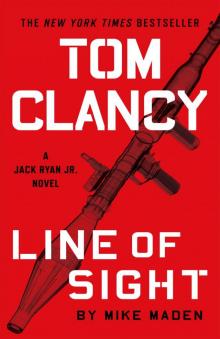 Line of Sight - Mike Maden
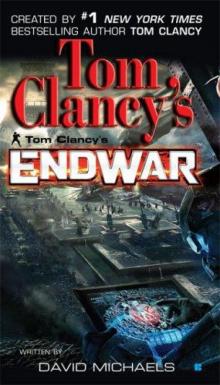 EndWar
 Dead or Alive
 Tom Clancy Support and Defend
 Checkmate
 Command Authority
 Carrier: A Guided Tour of an Aircraft Carrier
 Blacklist Aftermath
 Marine: A Guided Tour of a Marine Expeditionary Unit
 Commander-In-Chief
 Armored Cav: A Guided Tour of an Armored Cavalry Regiment
 Tom Clancy's Jack Ryan Books 1-6
 The Ultimate Escape
 Airborne: A Guided Tour of an Airborne Task Force
 Debt of Honor
 Cyberspy
 Point of Contact
 Operation Barracuda (2005)
 Choke Point
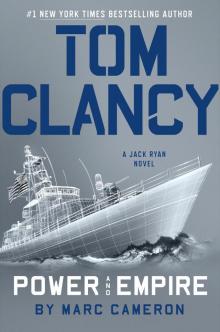 Power and Empire
 Every Man a Tiger: The Gulf War Air Campaign
 Endgame (1998)
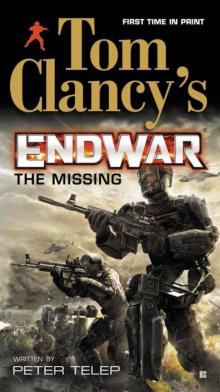 EndWar: The Missing
 Splinter Cell (2004)
 The Great Race
 True Faith and Allegiance
 Deathworld
 Ghost Recon (2008)
 Duel Identity
 Line of Control o-8
 The Hunt for Red October jr-3
 Hidden Agendas nf-2
 Acts of War oc-4
 Ruthless.Com pp-2
 Night Moves
 The Hounds of Rome - Mystery of a Fugitive Priest
 Into the Storm: On the Ground in Iraq sic-1
 Threat Vector jrj-4
 Combat Ops gr-2
 Virtual Vandals nfe-1
 Runaways nfe-16
 Marine: A Guided Tour of a Marine Expeditionary Unit tcml-4
 Shadow Warriors: Inside the Special Forces sic-3
 Jack Ryan Books 1-6
 Cold Case nfe-15
 Changing of the Guard nf-8
 Splinter Cell sc-1
 Battle Ready sic-4
 The Bear and the Dragon jrao-11
 Fighter Wing: A Guided Tour of an Air Force Combat Wing tcml-3
 Patriot Games jr-1
 Jack Ryan Books 7-12
 Mission of Honor o-9
 Private Lives nfe-9
 Operation Barracuda sc-2
 Cold War pp-5
 Point of Impact nf-5
 Red Rabbit jr-9
 The Deadliest Game nfe-2
 Springboard nf-9
 Safe House nfe-10
 EndWar e-1
 Duel Identity nfe-12
 Deathworld nfe-13
 Politika pp-1
 Rainbow Six jr-9
 Tom Clancy's Power Plays 1 - 4
 Endgame sc-6
 Executive Orders jr-7
 Net Force nf-1
 Call to Treason o-11
 Locked On jrj-3
 Against All Enemies
 The Sum of All Fears jr-7
 Sea of Fire o-10
 Fallout sc-4
 Balance of Power o-5
 Shadow Watch pp-3
 State of War nf-7
 Wild Card pp-8
 Games of State o-3
 Death Match nfe-18
 Against All Enemies mm-1
 Every Man a Tiger: The Gulf War Air Campaign sic-2
 Cybernation nf-6
 Support and Defend
 Night Moves nf-3
 SSN
SSN Cutting Edge pp-6
 The Cardinal of the Kremlin jrao-5
 War of Eagles o-12
 Op-Center o-1
 Mirror Image o-2
 The Archimedes Effect nf-10
 Teeth of the Tiger jrj-1
 Bio-Strike pp-4
 State of Siege o-6
 Debt of Honor jr-6
 Zero Hour pp-7
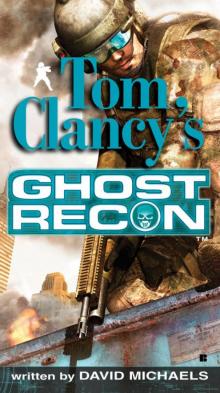 Ghost Recon gr-1
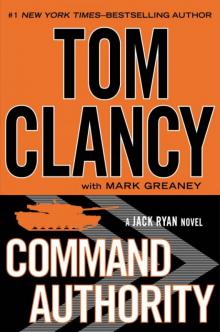 Command Authority jr-10
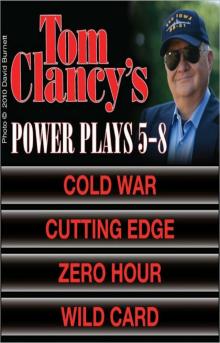 Tom Clancy's Power Plays 5 - 8
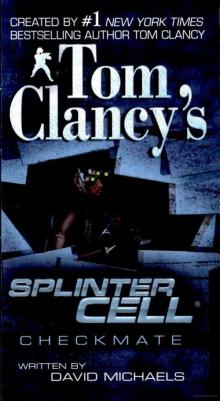 Checkmate sc-3
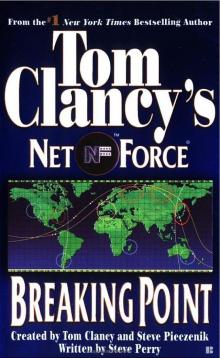 Breaking Point nf-4
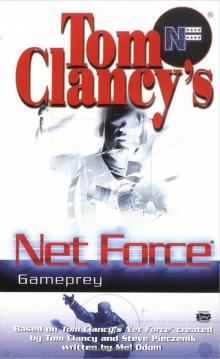 Gameprey nfe-11
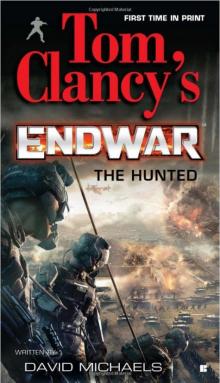 The Hunted e-2
 Hidden Agendas
 Divide and Conquer o-7