
- Home
- Tom Clancy
Executive Orders Page 81
Executive Orders Read online
Page 81
And now one of their head spooks wasn’t talking about how his forces could handle anything the Islamic world might throw at his country. That was worth a contact report to Washington, Magruder thought.
THE BUSINESS JET once “lost” in the Mediterranean could no longer leave the country. Even using it to ferry the Iraqi generals to Sudan had been a mistake, but a necessary one, and perhaps the odd covert mission was all right as well, but for the most part it had become Daryaei’s personal transport, and a useful one, for his time was short, and his new country large. Within two hours of seeing his Sunni visitors off, he was back in Tehran.
“So?”
Badrayn laid out his papers on the desk, showing cities and routes and times. It was mere mechanics. Daryaei looked the plans over with a cursory eye, and while they seemed overly complex, that was not a major concern for him. He’d seen maps before. He looked up for the explanation that had to come with the paperwork.
“The primary issue is time,” Badrayn said. “We want to have each traveler to his destination no more than thirty hours after departure. This one, for example, leaves Tehran at six A.M., and arrives in New York at two A.M. Tehran time, elapsed time twenty hours. The trade show he will attend—it is at the Jacob Javits Center in New York—will be open past ten in the evening. This one departs at 2:55 A.M., and ultimately arrives in Los Angeles twenty-three hours later—early afternoon, local time. His trade show will be open all day. That is the most lengthy in terms of distance and time, and his ‘package’ will still be more than eighty-five percent effective.”
“And security?”
“They are all fully briefed. I have selected intelligent, educated people. All they need do is be pleasant en route. After that, a little caution. Twenty at once, yes, that is troublesome, but those were your orders.”
“And the other group?”
“They will go out two days later via similar arrangements,” Badrayn reported. “That mission is far more dangerous.”
“I am aware of that. Are the people faithful?”
“They are that.” Badrayn nodded, knowing that the question really asked if they were fools. “The political risks concern me.”
“Why?” The observation didn’t surprise Daryaei, but he wanted the reason.
“The obvious question of discovering who sent them, though their travel documents will be properly prepared, and the usual security measures put in place. No, I mean the American political context. An unhappy event to a politician can often create sympathy for him, and from that sympathy can come political support.”
“Indeed! It does not make him appear weak?” That was rather much to swallow.
“In our context, yes, but not necessarily in theirs.”
Daryaei considered that and compared it with other analyses he’d ordered and reviewed. “I have met Ryan. He is weak. He does not deal effectively with his political difficulties. He still has no true government behind him. Between the first mission and the second, we will break him—or at least we will distract him long enough to achieve our next goal. After that is accomplished, America becomes irrelevant.”
“Better the first mission only,” Badrayn advised.
“We must shake their people. If what you say of their government is true, we will do such harm as they have never known. We will shake their leader, we will shake his confidence, we will shake the confidence of the people in him.”
He had to respond to that carefully. This was a Holy Man with a Holy Mission. He was not fully amenable to reason. And yet there was one other factor which he didn’t know about. There had to be. Daryaei was more given to wishes than considered action—no, that wasn’t true, was it? He united the two while giving another impression entirely. What the cleric did appreciate was that the American government was still vulnerable, since its lower house of parliament had not yet been replaced, a process just beginning.
“Best of all merely to kill Ryan, if we could. An attack on children will inflame them. Americans are very sentimental about little ones.”
“The second mission goes on only after the first is known to be successful?” Daryaei demanded.
“Yes, that is true.”
“Then that is sufficient,” he said, looking back down at the travel arrangements, and leaving Badrayn to his own thoughts.
There is a third element. There had to be.
“HE SAYS HIS intentions are peaceful.”
“So did Hitler, Ali,” the President reminded his friend. He checked his watch. It was after midnight in Saudi Arabia. Ali had flown back and conferred with his government before calling Washington, as one would expect. “You know about the troop movement.”
“Yes, your people briefed our military earlier today. It will be some time before they are ready to make any threat. Such things take time. Remember, I was once in uniform.”
“True, that’s what they told me, too.” Ryan paused. “Okay, what does the Kingdom propose?”
“We will observe closely. Our military is training. We have your pledge of support. We are concerned, but not overly so.”
“We could schedule some joint exercises,” Jack offered.
“That might only inflame matters,” the Prince replied. The absence of total conviction in his voice was not accidental. He’d probably fielded the idea in council himself and gotten a negative reply.
“Well, I guess you’ve had a long day. Tell me, how did Daryaei look? I haven’t seen the guy since you introduced him to me.”
“His health appears good. He looks tired, but he’s had a busy time.”
“I can relate to that. Ali?”
“Yes, Jack?”
The President stopped then, reminding himself that he was unschooled in diplomatic exchange. “How concerned should I be about all this?”
“What do your people tell you?” the Prince replied.
“About the same as you do, but not all of them. We need to keep this line open, my friend.”
“I understand, Mr. President. Good-bye for now.”
It was an unsatisfactory conclusion to an unsatisfactory call. Ryan replaced the phone and looked around at his empty office. Ali wasn’t saying what he wanted to say because the position of his government was different from what he thought it should be. The same had happened to Jack often enough, and the same rules applied. Ali had to be loyal to that government—hell, it was mainly his own family—but he had allowed himself one slip, and the Prince was too clever to do that sort of thing by mistake. It probably would have been easier before, when Ryan had not been President and both could talk without the worry of making policy with every word. Now Jack was America to those beyond the borders, and governmental officials could talk to him only that way, instead of remembering that he was also a thinking man who needed to explore options before making decisions. Maybe if it hadn’t been over the phone, Jack thought. Maybe face-to-face would have been better. But even Presidents were limited by time and space.
36
TRAVELERS
KLM—ROYAL DUTCH AIRLINES—FLIGHT 534—left the gate on time at 1:10 A.M. The aircraft was full at this hour, full of weary people who stumbled to their seats, strapped in, and accepted pillows and blankets. The more experienced travelers among them waited for the sound of the wheels being retracted, then pushed their seats as far back as they could go, and closed their eyes in the hope of a smooth ride and something akin to real sleep.
Five of Badrayn’s men were aboard, two in first class, three in business. They all had baggage in the cargo hold, and a carry-on tucked under the seat in front. All had a minor case of nerves, and all would have had a drink to ameliorate it—religious prohibition or not—but the aircraft had landed in an Islamic airport and would not serve alcohol until it had left United Islamic Republic airspace. To a man, they considered their situation and bowed to circumstance. They’d been well briefed and properly prepared. They’d come through the airport like ordinary travelers, and submitted their carry-ons to X-ray inspection by secu
rity personnel who were every bit as careful as their Western counterparts actually more so, since the flights were relatively few, and the local paranoia relatively greater. In every case, the X-ray display had shown a shaving kit, along with papers, books and other sundries.
They were all educated men, many of them having attended the American University of Beirut, some to obtain degrees, the others simply to learn about the enemy. They were dressed neatly, all with ties, loose now in their collars, and their coats hung in the mini-closets throughout the aircraft. Within forty minutes, they, along with the rest of the passengers, were fitfully asleep.
“SO WHAT’S YOUR take on all this?” van Damm asked.
Holtzman swirled his drink, watching the ice cubes circle around. “Under different circumstances I might call it a conspiracy, but it’s not. For a guy who says he’s just trying to put things back together, Jack sure is doing a lot of new and crazy things.”
“ ‘Crazy’ is a little strong, Bob.”
“Not for them, it isn’t. Everybody’s saying ‘he isn’t one of us,’ and they’re reacting strongly to his initiatives. Even you have to admit that his tax ideas are a little way off the usual playing field, but that’s the excuse for what’s happening—one of the excuses, anyway. The game’s the same one it always was. A couple of leaks, and the manner of their presentation, that’s what determines how it’s played.”
Arnie had to nod. It was like highway littering. If someone dumped all the trash in the proper barrel, then things were neat, and the task was done in a few seconds. If that same someone tossed it all out the window of a moving car, then you had to spend hours picking it all up. The other side was now dumping the trash haphazardly, and the President was having to use his limited time doing wasteful and unproductive things instead of the real work of driving down the road. The simile was ugly, but apt. Politics was so often less about doing constructive work than about spreading garbage around for others to clean up.
“Who leaked?”
The reporter shrugged. “I can only guess. Somebody in the Agency, probably somebody who’s being RIF’d. You have to admit that building up the spy side of the house looks kind of Neanderthal. How far are they cutting the Intelligence Directorate?”
“More than enough to compensate for the new field people. The idea is to save money overall, better information, more efficient overall performance, that sort of thing. I don’t,” he added, “tell the President how to do intelligence stuff. On that, he really is an expert.”
“I know that. I had my story almost ready to run. I was about to call you for an interview with him when the bubble broke.”
“Oh? And—”
“What was my angle? He’s the most contradictory son of a bitch in this town. In some ways he’s brilliant—but in others? Babe-in-the-woods is charitable.”
“Go on.”
“I like the guy,” Holtzman admitted. “For damned sure, he’s honest—not relatively honest, really honest. I was going to tell it pretty much the way it was. You want to know what has me pissed?” He paused for a sip of the bourbon, hesitated again before proceeding, and then spoke with unconcealed anger. “Somebody at the Post leaked my story, probably to Ed Kealty. Then Kealty probably arranged a leak to Donner and Plumber.”
“And they used your story to hang him?”
“Pretty much,” Holtzman admitted.
Van Damm nearly laughed. He held it back for as long as he could, but it was too delicious to resist: “Welcome to Washington, Bob.”
“You know, some of us really do take our professional ethics seriously,” the reporter shot back, rather lamely. “It was a good story. I researched the hell out of it. I got my own source in CIA—well, I have several, but I got a new one for this, somebody who really knew the stuff. I took what he gave me, and I back-checked the hell out of it, verified everything I could, wrote the piece stating what I knew and what I thought—careful to explain the difference at all times,” he assured his host. “And you know? Ryan comes out looking pretty good. Yeah, sure, sometimes he short-circuits the system, but the guy’s never broken the rules far as I can tell. If we ever have a major crisis, that’s the guy I want in the Oval Office. But some son of a bitch took my story, my information from my sources, and played with it, I don’t like that, Arnie. I have a public trust, too, and so does my paper, and somebody fucked with that.” He set his drink down. “Hey, I know what you think about me and my ”
“No, you don’t,” van Damm interrupted.
“But you’ve always—”
“I’m the chief of staff, Bob. I have to be loyal to my boss, and so I have to play the game from my side, but if you think I don’t respect the press, you’re not as smart as you’re supposed to be. We’re not always friends. Sometimes we’re enemies, but we need you as much as you need us. For Christ’s sake, if I didn’t respect you, why the hell are you drinking my booze?”
It was either an elegant roll or a truthful statement, Holtzman thought, and Arnie was too skillful a player for him to tell the difference right off. But the smart thing to do was finish the drink, which he did. A pity that his host preferred cheap booze to go along with his L. L. Bean shirts. Arnie didn’t know how to dress, either. Or maybe that was a considered part of his mystique. The political game was so intricate as to be a cross between classical metaphysics and experimental science. You could never know it all, and finding out one part as often as not denied you the ability to find out another, equally important part. But that was why it was the best game in town.
“Okay, Arnie, I’ll accept that.”
“Good of you.” Van Damm smiled, and refilled the glass. “So why did you call me?”
“It’s almost embarrassing.” Another pause. “I will not participate in the public hanging of an innocent man.”
“You’ve done that before,” Arnie objected.
“Maybe so, but they were all politicians, and they all had it coming in one way or another. I don’t know what—okay, how about I’m not into child abuse? Ryan deserves a fair chance.”
“And you’re pissed about losing your story and the Pulitzer that—”
“I have two of them already,” Holtzman reminded him. Otherwise, he would have been taken off the story by his managing editor, but internal politics at the Washington Post were as vicious as those elsewhere in the city.
“So?”
“So, I need to know about Colombia. I need to know about Jimmy Cutter and how he died.”
“Jesus, Bob, you don’t know what our ambassador went through down there today.”
“Great language for invective, Spanish.” A reporter’s smile.
“The story can’t be told, Bob. It just can’t.”
“The story will be told. It’s just a question of who tells it, and that will determine how it’s told. Arnie, I know enough now to write something, okay?”
As so often happened in Washington at times like this, everyone was trapped by circumstance. Holtzman had a story to write. Doing it the right way would, perhaps, resurrect his original story, put him in the running for another Pulitzer—it was still important to him, previous denials notwithstanding, and Arnie knew it—and tell whoever had leaked his story to Ed Kealty that he or she had better leave the Post before Holtzman nailed that name down and wrecked his or her career with a few well-placed whispers and more than a few dead-end assignments. Arnie was trapped by his duty to protect his President, and the only way to do it was to violate the law and his President’s trust. There had to be an easier way, the chief of staff thought, to earn a living. He could have made Holtzman wait for his decision, but that would have been mere theatrics, and both men were past that.
“No notes, no tape recorder.”
“Off the record. ‘Senior official,’ not even ‘senior administration official,’ ” Bob agreed.
“And I can tell you who to confirm it with.”
“They know it all?”
“Even more than I do,” van Damm told him. “H
ell, I just found out about the important part.”
A raised eyebrow. “That’s nice, and the same rules will apply to them. Who really knows about this?”
“Even the President doesn’t know it all. I’m not sure if anybody knows it all.”
Holtzman took another sip. It would be his last. Like a doctor in an operating room, he didn’t believe in mixing alcohol and work.
FLIGHT 534 TOUCHED down at Istanbul at 2:55 A.M. local time, after a flight of 1,270 miles and three hours, fifteen minutes. The passengers were groggily awake, having been roused by the cabin staff thirty minutes earlier and told to put their seat-backs to the upright position in a series of languages. The landing was smooth, and a few of them raised the plastic shades on the windows to see that they were indeed on the ground at one more anonymous piece of real estate with white runway lights and blue taxiway lights, just like those all over the world. Those getting out stood at the proper time to stumble off into the Turkish night. The rest pushed their seats back for another snooze during the forty-five-minute layover, before the aircraft left yet another gate at 3:40 A.M. for the second half of the trip.
 Changing of the Guard
 Clear and Present Danger
 Hounds of Rome
 Breaking Point
 Tom Clancy's Jack Ryan Books 7-12
 Full Force and Effect
 The Archimedes Effect
 Combat Ops
 Into the Storm: On the Ground in Iraq
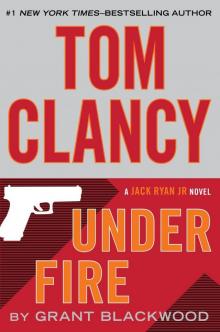 Under Fire
 Point of Impact
 Red Rabbit
 Rainbow Six
 The Hunt for Red October
 The Teeth of the Tiger
 Conviction (2009)
 Battle Ready
 Patriot Games
 The Sum of All Fears
 Fallout (2007)
 Red Storm Rising
 The Cardinal of the Kremlin
 Executive Orders
 Lincoln, the unknown
 Threat Vector
 The Hunted
 Shadow Warriors: Inside the Special Forces
 End Game
 Special Forces: A Guided Tour of U.S. Army Special Forces
 Locked On
 Line of Sight
 Tom Clancy Enemy Contact - Mike Maden
 Fighter Wing: A Guided Tour of an Air Force Combat Wing
 Springboard
 Line of Sight - Mike Maden
 EndWar
 Dead or Alive
 Tom Clancy Support and Defend
 Checkmate
 Command Authority
 Carrier: A Guided Tour of an Aircraft Carrier
 Blacklist Aftermath
 Marine: A Guided Tour of a Marine Expeditionary Unit
 Commander-In-Chief
 Armored Cav: A Guided Tour of an Armored Cavalry Regiment
 Tom Clancy's Jack Ryan Books 1-6
 The Ultimate Escape
 Airborne: A Guided Tour of an Airborne Task Force
 Debt of Honor
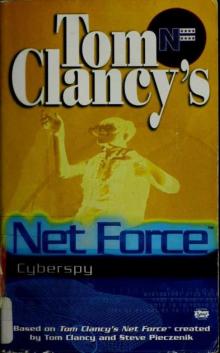 Cyberspy
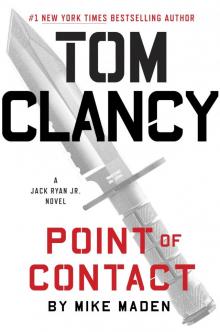 Point of Contact
 Operation Barracuda (2005)
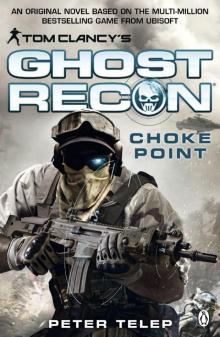 Choke Point
 Power and Empire
 Every Man a Tiger: The Gulf War Air Campaign
 Endgame (1998)
 EndWar: The Missing
 Splinter Cell (2004)
 The Great Race
 True Faith and Allegiance
 Deathworld
 Ghost Recon (2008)
 Duel Identity
 Line of Control o-8
 The Hunt for Red October jr-3
 Hidden Agendas nf-2
 Acts of War oc-4
 Ruthless.Com pp-2
 Night Moves
 The Hounds of Rome - Mystery of a Fugitive Priest
 Into the Storm: On the Ground in Iraq sic-1
 Threat Vector jrj-4
 Combat Ops gr-2
 Virtual Vandals nfe-1
 Runaways nfe-16
 Marine: A Guided Tour of a Marine Expeditionary Unit tcml-4
 Shadow Warriors: Inside the Special Forces sic-3
 Jack Ryan Books 1-6
 Cold Case nfe-15
 Changing of the Guard nf-8
 Splinter Cell sc-1
 Battle Ready sic-4
 The Bear and the Dragon jrao-11
 Fighter Wing: A Guided Tour of an Air Force Combat Wing tcml-3
 Patriot Games jr-1
 Jack Ryan Books 7-12
 Mission of Honor o-9
 Private Lives nfe-9
 Operation Barracuda sc-2
 Cold War pp-5
 Point of Impact nf-5
 Red Rabbit jr-9
 The Deadliest Game nfe-2
 Springboard nf-9
 Safe House nfe-10
 EndWar e-1
 Duel Identity nfe-12
 Deathworld nfe-13
 Politika pp-1
 Rainbow Six jr-9
 Tom Clancy's Power Plays 1 - 4
 Endgame sc-6
 Executive Orders jr-7
 Net Force nf-1
 Call to Treason o-11
 Locked On jrj-3
 Against All Enemies
 The Sum of All Fears jr-7
 Sea of Fire o-10
 Fallout sc-4
 Balance of Power o-5
 Shadow Watch pp-3
 State of War nf-7
 Wild Card pp-8
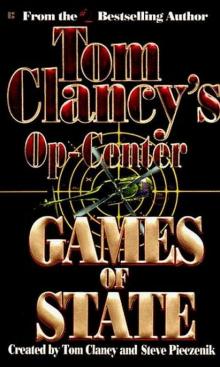 Games of State o-3
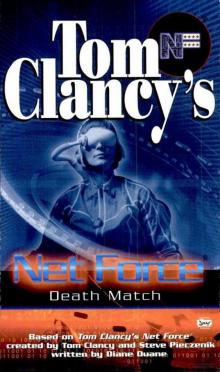 Death Match nfe-18
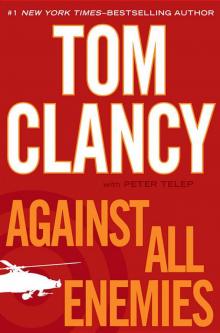 Against All Enemies mm-1
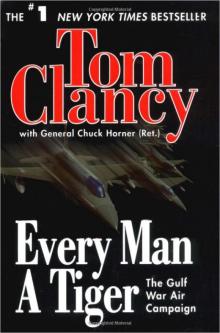 Every Man a Tiger: The Gulf War Air Campaign sic-2
 Cybernation nf-6
 Support and Defend
 Night Moves nf-3
 SSN
SSN Cutting Edge pp-6
 The Cardinal of the Kremlin jrao-5
 War of Eagles o-12
 Op-Center o-1
 Mirror Image o-2
 The Archimedes Effect nf-10
 Teeth of the Tiger jrj-1
 Bio-Strike pp-4
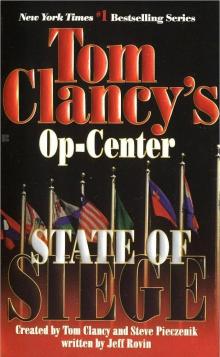 State of Siege o-6
 Debt of Honor jr-6
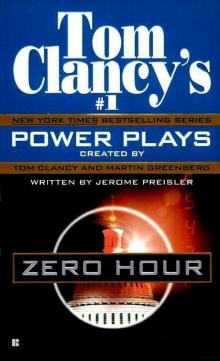 Zero Hour pp-7
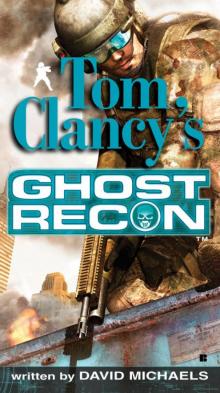 Ghost Recon gr-1
 Command Authority jr-10
 Tom Clancy's Power Plays 5 - 8
 Checkmate sc-3
 Breaking Point nf-4
 Gameprey nfe-11
 The Hunted e-2
 Hidden Agendas
 Divide and Conquer o-7