
- Home
- Tom Clancy
Clear and Present Danger Page 11
Clear and Present Danger Read online
Page 11
“Doesn’t look very good. Couple of months at most,” Ritter replied.
“Damn.” Clark stared into his drink, then looked up. “I owe that man a lot. Like my whole life. They can’t do anything?”
“No, it’s spread too much for that. They can keep him comfortable, that’s about all. Sorry. He’s my friend, too.”
“Yes, sir, I know.” Clark finished off his drink and went back to work. “I still don’t know exactly what you have in mind, but you can forget about going after them in their houses.”
“That tough?”
Clark nodded. “That tough. It’s a job for real infantry with real support, and even then you’re going to take real casualties. From what Larson tells me, the security troops these characters have are pretty good. I suppose you might try to buy a few off, but they’re probably well paid already, so that might just backfire.” The field officer didn’t ask what the real mission was, but he assumed it was to snatch some warm bodies and whisk them off stateside, where they’d arrive gift-wrapped in front of some FBI office, or maybe a U.S. courthouse. Like everyone else, he was making an incorrect guess. “Same thing with bagging one on the move. They take the usual precautions—irregular schedules, irregular routes, and they have armed escorts everywhere they go. So bagging one on the fly means having good intel, which means having somebody on the inside. Larson is as close to being inside as anybody we’ve ever run, and he’s not close enough. Trying to get him in closer will get him killed. He’s gotten us some good data—Larson’s a pretty good kid—and the risks of trying that are just too great. I presume the local people have tried to—”
“They have. Six of them ended up dead or missing. Same thing with informers. They disappear a lot. The locals are thoroughly penetrated. They can’t run any sort of op for long without risking their own. You do that long enough and people stop volunteering.”
Clark shrugged and looked out to seaward. There was a white-hulled cruise ship inbound on the horizon. “I suppose I shouldn’t have been surprised at how tough these bastards are. Larson was right, what brains they don’t already have they can buy. Where do they hire their consultants?”
“Open market, mainly Europe, and—”
“I mean the intel pros. They must have some real spooks.”
“Well, there’s Félix Cortez. That’s only a rumor, but the name’s come up half a dozen times in the past few months.”
“The DGI colonel who disappeared,” Clark observed. The DGI was Cuba’s intelligence service, modeled on the Soviet KGB. Cortez had been reported working with the Macheteros, a Puerto Rican terrorist group that the FBI had largely run to ground in the past few years. Another DGI colonel named Filiberto Ojeda had been arrested by the Bureau, after which Cortez had disappeared. So he’d decided to remain outside his country’s borders. Next question: had Cortez decided to opt for this most vigorous branch of the free-enterprise system or was he still working under Cuban control? Either way, DGI was Russian-trained. Its senior people were graduates of the KGB’s own academy. They were, therefore, opponents worthy of respect. Certainly Cortez was. His file at the Agency spoke of a genius for compromising people to get information.
“Larson know about this?”
“Yeah. He caught the name at a party. Of course, it would help if we knew what the hell Cortez looks like, but all we have is a description that fits half the people south of the Rio Grande. Don’t worry. Larson knows how to be careful, and if anything goes wrong, he’s got his own airplane to get out of Dodge with. His orders are fairly specific on that score. I don’t want to lose a trained field officer doing police work.” Ritter added, “I sent you down for a fresh appraisal. You know what the overall objective is. Tell me what you think is possible.”
“Okay. You’re probably right to go after the airfields and to keep it an intelligence-gathering operation. Given the necessary surveillance assets, we could finger processing sites fairly easily, but there’s a lot of them and their mobility demands a rapid reaction time to get there. I figure that’ll work maybe a half-dozen times, max, before the other side wises up. Then we’ll take casualties, and if the bad guys get lucky, we might lose a whole assault force—if you’ve got people thinking in those terms. Tracking the finished product from the processing sites is probably impossible without a whole lot of people on the ground—too many to keep it a covert op for very long—and it wouldn’t buy us very much anyway. There are a lot of little airfields on the northern part of the country to keep an eye on, but Larson thinks that they may be victims of their own success. They’ve been so successful buying off the military and police in that district that they might be falling into a regular pattern of airfield use. If the insertion teams keep a low profile, they could conceivably operate for two months—that may be a little generous—before we have to yank them out. I need to see the teams, see how good they are.”
“I can arrange that,” Ritter said. He’d already decided to send Clark to Colorado. Clark was the best man to evaluate their capabilities. “Go on.”
“What we’re setting up will go all right for a month or two. We can watch their aircraft lift off and call it ahead to whoever else is wrapped up in this.” This was the only part of the op that Clark knew about. “We can inconvenience them for that long, but I wouldn’t hope for much more.”
“You’re painting a fairly bleak picture, Clark.”
Clark leaned forward. “Sir, if you want to run a covert operation to gather usable tactical intelligence against an adversary who’s this decentralized in his own operations—yes, it’s possible, but only for a limited period of time and only for a limited return. If you increase the assets to try and make it more effective, you’re going to get blown sure as hell. You can run an operation like that, but it can’t be for long. I don’t know why we’re even bothering.” That wasn’t quite true. Clark figured, correctly, that the reason was that it was an election year, but that wasn’t the sort of observation a field officer was allowed to make—especially when it was a correct one.
“Why we’re bothering isn’t strictly your concern,” Ritter pointed out. He didn’t raise his voice. He didn’t have to, and Clark was not a man to be intimidated.
“Fine, but this is not a serious undertaking. It’s an old story, sir. Give us a mission we can do, not one we can’t. Are we serious about this or aren’t we?”
“What do you have in mind?” Ritter asked.
Clark told him. Ritter’s face showed little in the way of emotion at the answer to his question. One of the nice things about Clark, Ritter thought to himself, was that he was the only man in the Agency who could discuss these topics calmly and dispassionately—and really mean it. There were quite a few for whom such talk was an interesting intellectual exercise, unprofessional speculation, really, gotten consciously or subconsciously from reading spy fiction. Gee, wouldn’t it be nice if we could ... It was widely believed in the general public that the Central Intelligence Agency employed a goodly number of expert professionals in this particular field. It didn’t. Even the KGB had gotten away from such things, farming this kind of work out to the Bulgarians—regarded by their own associates as uncouth barbarians—or genuine third-parties like terrorist groups in Europe and the Middle East. The political cost of such operations was too high, and despite the mania for secrecy cultivated by every intelligence service in the world, such things always got out eventually. The world had gotten far more civilized since Ritter had graduated from The Farm on the York River, and while he thought that a genuinely good thing, there were times when a return to the good old days beckoned with solutions to problems that hadn’t quite gone away.
“How hard would it be?” Ritter asked, interested.
“With the proper backup and some additional assets—it’s a snap.” Clark explained what special assets were needed. “Everything they’ve done plays into our hands. That’s the one mistake they’ve made. They’re conventional in their defensive outlook. Same old thing, really. It’s
a matter of who determines the rules of the game. As things now stand, we both play by the same rules, and those rules, as applied here, give the advantage to the opposition. We never seem to learn that. We always let the other side set the rules. We can annoy them, inconvenience them, take away some of their profit margin, but, hell, given what they already make, it’s a minor business loss. I only see one thing changing that.”
“Which is?”
“How’d you like to live in a house like that one?” Clark asked, handing over one of his photographs.
“Frank Lloyd Wright meets Ludwig the Mad,” Ritter observed with a chuckle.
“The man who commissioned that house is growing quite an ego, sir. They have manipulated whole governments. Everyone says that they are a government for all practical purposes. They said the same thing in Chicago during Prohibition, that Capone really ran the town—just one city, right? Well, these people are on their way to running their own country, and renting out others. So let’s say that they do have the de facto power of a government. Factor ego into that. Sooner or later they’re going to start acting like one. I know we won’t break the rules. But it wouldn’t surprise me if they stepped outside them once or twice, just to see what they might get away with. You see what I mean? They keep expanding their own limits, and they haven’t found the brick wall yet, the one that tells them where to stop.”
“John, you’re turning into a psychologist,” Ritter noted with a thin smile.
“Maybe so. These guys peddle addictive drugs, right? Mostly they do not use the stuff themselves, but I think they’re getting themselves hooked on the most powerful narcotic there is.”
“Power.”
Clark nodded. “Sooner or later, they’re going to OD. At that point, sir, somebody’s going to think seriously about what I just proposed. When you get into the majors, the rules change some. That’s a political decision, of course.”
He was master of all he surveyed. At least that was the phrase that came to mind, and with all such aphorisms it could be both true and false at the same time. The valley into which he looked did not all belong to him; the parcel of land on which he stood was less than a thousand hectares, and his vista included a million. But not one person who lived within his view could continue to live were he to decide otherwise. That was the only sort of power that mattered, and it was a form of power that he had exercised on occasions too numerous to count. A flick of the wrist, a casual remark to an associate, and it was done. It wasn’t that he had ever been casual about it—death was a serious business—but he knew that he could be. It was the sort of power that might make a man mad, he knew. He’d seen it happen among his own business associates, to their sorrow on several occasions. But he was a student of the world, and a student of history. Unusually, for someone in his chosen trade, he was the beneficiary of a good education, something forced on him by his late father, one of the pioneers. One of the greatest regrets of his life was that he’d never expressed his gratitude for it. Because of it he understood economics as well as any university professor. He understood market forces and trends. And he understood the historical forces that brought them about. He was a student of Marxism; though he rejected the Marxist outlook for a multiplicity of reasons, he knew that it contained more than one grain of truth intermixed with all the political gibberish. The rest of his professional education had been what Americans called “on-the-job training.” While his father had helped invent a whole new way of doing business, he had watched and advised, and taken action. He’d explored new markets, under his father’s direction, and formed the reputation of a careful, thorough planner, often sought after but never apprehended. He’d been arrested only once, but after two of the witnesses had died, the others had grown forgetful, ending his direct experience with police and courts.
He deemed himself a carry-over from another age—a classic robber-baron capitalist. A hundred years before, they’d driven railroads across the United States—he was a genuine expert on that country—and crushed anything in their path. Indian tribes—treated like a two-legged version of the plains buffalo and swatted aside. Unions—neutralized with hired thugs. Governments—bribed and subverted. The press—allowed to bray on ... until too many people listened. He’d learned from that example. The local press was no longer terribly outspoken, not after learning that its members were mortal. The railroad barons had built themselves palatial homes—winter ones in New York, and summer “cottages” at Newport. Of course, he had problems that they’d not faced, but any historical model broke down if you took it too far. He also chose to ignore the fact that the Goulds and the Harrimans had built something that was useful, not destructive, to their societies. One other lesson he had learned from the previous century was that cutthroat competition was wasteful. He had persuaded his father to seek out his competitors. Even then his powers of persuasion had been impressive. Cleverly, it had been done at a time when danger from outside forces made cooperation attractive. Better to cooperate, the argument had gone, than to waste time, money, energy, and blood—and increase their own personal vulnerabilities. And it had worked.
His name was Ernesto Escobedo. He was one of many within the Cartel, but most of his peers would acknowledge that his was a voice to which all listened. They might not all agree, not all bend to his will, but his ideas were always given the attention they deserved because they had proven to be effective ones. The Cartel had no head as such, since the Cartel was not a single enterprise, but rather a collection of leaders who operated in close confederation—almost a committee, but not quite; almost friends, but not that either. The comparison to the American Mafia suggested itself, but the Cartel was both more civilized and more savage than that. Escobedo would have chosen to say that the Cartel was more effectively organized, and more vigorous, both attributes of a young and vital organization, as opposed to one that was older and feudal.
He knew that the sons of the robber barons had used the wealth accumulated by their antecedents to form a power elite, coming to rule their nation with their “service.” He was unwilling to leave such a legacy to his sons, however. Besides, he himself was technically one of the second generation. Things moved more quickly now. The accumulation of great wealth no longer demanded a lifetime, and, therefore, Ernesto told himself, he didn’t have to leave that to his sons. He could have it all. The first step in accomplishing any goal was deciding that it was possible. He had long since come to that decision.
It was his goal to see it done. Escobedo was forty, a man of uncommon vigor and confidence. He had never used the product which he provided for others, instead altering his consciousness with wine—and that rarely, now. A glass or two with dinner; perhaps some hard liquor at business meetings with his peers, but more often Perrier. This trait earned him more respect among his associates. Escobedo was a sober, serious man, they all knew. He exercised regularly, and paid attention to his appearance. A smoker in his youth, he’d broken the habit young. He watched his diet. His mother was still alive and vigorous at seventy-three; her mother was the same at ninety-one. His father would have been seventy-five last week, he knew, except for ... but the people who’d ended his father’s life had paid a savage price for their crime, along with all of their families, mostly at Escobedo’s own hand. It was something he remembered with filial pride, taking the last one’s wife while her dying husband watched, killing her and the two little ones before his eyes closed for the last time. He took no pleasure in killing women and children, of course, but such things were necessary. He’d shown that one who was the better man, and as word of the feat spread, it had become unlikely that his family would ever be troubled again. He took no pleasure from it, but history taught that harsh lessons made for long memories. It also taught that those who failed to teach such lessons would not be respected. Escobedo demanded respect above all things. His personal involvement in settling that particular account, instead of leaving it to hirelings, had earned him considerable prestige within the organization. Ernest
o was a thinker, his associates said, but he knew how to get things done.
His wealth was so great that counting it had no point. He had the godlike power of life and death. He had a beautiful wife and three fine sons. When the marriage bed palled, he had a choice of mistresses. Every luxury that money could purchase, he had. He had homes in the city below him, this hilltop fortress, and ranches near the sea—both seas, in fact, since Colombia borders on two great oceans. At the ranches were stables full of Arabian horses. Some of his associates had private bull rings, but that sport had never interested him. A crack shot, he had hunted everything that his country offered—including men, of course. He told himself that he ought to be satisfied. But he was not.
The American robber barons had traveled the world, had been invited to the courts of Europe, had married off their progeny to that of noble houses—a cynical exercise, he knew, but somehow a worthy one that he fully understood. The freedoms were denied him, and though the reason for it was plain enough, he was nevertheless offended that a man of his power and wealth could be denied anything. Despite everything that he had accomplished, there were still limits on his life—worse still, the limits were placed there by others of lesser power. Twenty years earlier he had chosen his path to greatness, and despite his obvious success, the fact that he’d chosen that particular path denied him the fruits that he wanted, because lesser men did not approve of it.
It had not always been so. “Law?” one of the great railroad men had said once. “What do I care about law?” And he had gotten away with it, had traveled about at will, had been recognized as a great man.
 Changing of the Guard
 Clear and Present Danger
 Hounds of Rome
 Breaking Point
 Tom Clancy's Jack Ryan Books 7-12
 Full Force and Effect
 The Archimedes Effect
 Combat Ops
 Into the Storm: On the Ground in Iraq
 Under Fire
 Point of Impact
 Red Rabbit
 Rainbow Six
 The Hunt for Red October
 The Teeth of the Tiger
 Conviction (2009)
 Battle Ready
 Patriot Games
 The Sum of All Fears
 Fallout (2007)
 Red Storm Rising
 The Cardinal of the Kremlin
 Executive Orders
 Lincoln, the unknown
 Threat Vector
 The Hunted
 Shadow Warriors: Inside the Special Forces
 End Game
 Special Forces: A Guided Tour of U.S. Army Special Forces
 Locked On
 Line of Sight
 Tom Clancy Enemy Contact - Mike Maden
 Fighter Wing: A Guided Tour of an Air Force Combat Wing
 Springboard
 Line of Sight - Mike Maden
 EndWar
 Dead or Alive
 Tom Clancy Support and Defend
 Checkmate
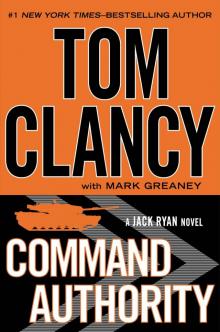 Command Authority
 Carrier: A Guided Tour of an Aircraft Carrier
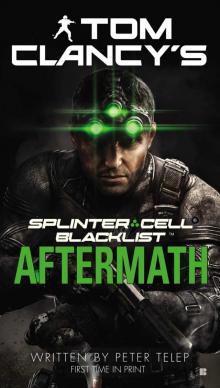 Blacklist Aftermath
 Marine: A Guided Tour of a Marine Expeditionary Unit
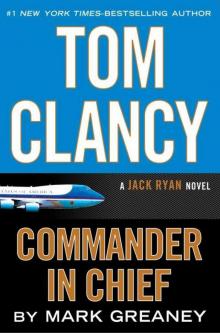 Commander-In-Chief
 Armored Cav: A Guided Tour of an Armored Cavalry Regiment
 Tom Clancy's Jack Ryan Books 1-6
 The Ultimate Escape
 Airborne: A Guided Tour of an Airborne Task Force
 Debt of Honor
 Cyberspy
 Point of Contact
 Operation Barracuda (2005)
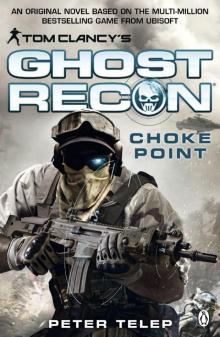 Choke Point
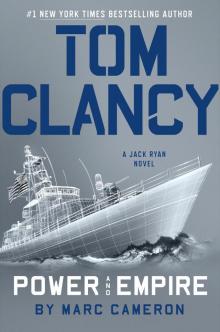 Power and Empire
 Every Man a Tiger: The Gulf War Air Campaign
 Endgame (1998)
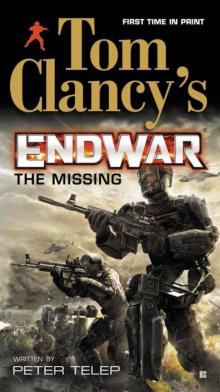 EndWar: The Missing
 Splinter Cell (2004)
 The Great Race
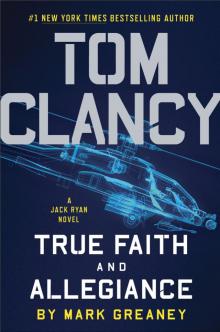 True Faith and Allegiance
 Deathworld
 Ghost Recon (2008)
 Duel Identity
 Line of Control o-8
 The Hunt for Red October jr-3
 Hidden Agendas nf-2
 Acts of War oc-4
 Ruthless.Com pp-2
 Night Moves
 The Hounds of Rome - Mystery of a Fugitive Priest
 Into the Storm: On the Ground in Iraq sic-1
 Threat Vector jrj-4
 Combat Ops gr-2
 Virtual Vandals nfe-1
 Runaways nfe-16
 Marine: A Guided Tour of a Marine Expeditionary Unit tcml-4
 Shadow Warriors: Inside the Special Forces sic-3
 Jack Ryan Books 1-6
 Cold Case nfe-15
 Changing of the Guard nf-8
 Splinter Cell sc-1
 Battle Ready sic-4
 The Bear and the Dragon jrao-11
 Fighter Wing: A Guided Tour of an Air Force Combat Wing tcml-3
 Patriot Games jr-1
 Jack Ryan Books 7-12
 Mission of Honor o-9
 Private Lives nfe-9
 Operation Barracuda sc-2
 Cold War pp-5
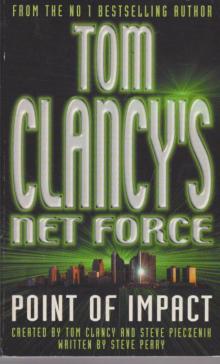 Point of Impact nf-5
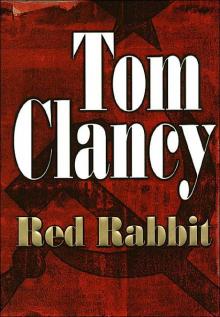 Red Rabbit jr-9
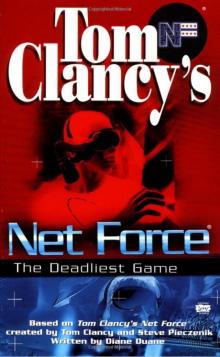 The Deadliest Game nfe-2
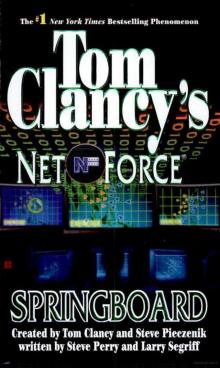 Springboard nf-9
 Safe House nfe-10
 EndWar e-1
 Duel Identity nfe-12
 Deathworld nfe-13
 Politika pp-1
 Rainbow Six jr-9
 Tom Clancy's Power Plays 1 - 4
 Endgame sc-6
 Executive Orders jr-7
 Net Force nf-1
 Call to Treason o-11
 Locked On jrj-3
 Against All Enemies
 The Sum of All Fears jr-7
 Sea of Fire o-10
 Fallout sc-4
 Balance of Power o-5
 Shadow Watch pp-3
 State of War nf-7
 Wild Card pp-8
 Games of State o-3
 Death Match nfe-18
 Against All Enemies mm-1
 Every Man a Tiger: The Gulf War Air Campaign sic-2
 Cybernation nf-6
 Support and Defend
 Night Moves nf-3
 SSN
SSN Cutting Edge pp-6
 The Cardinal of the Kremlin jrao-5
 War of Eagles o-12
 Op-Center o-1
 Mirror Image o-2
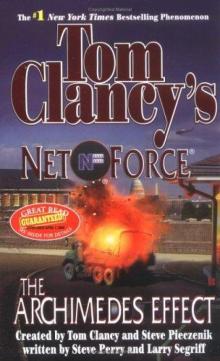 The Archimedes Effect nf-10
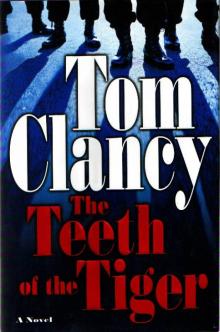 Teeth of the Tiger jrj-1
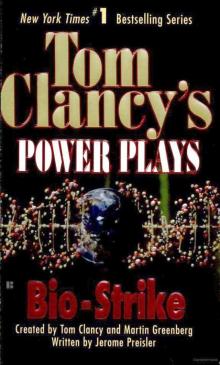 Bio-Strike pp-4
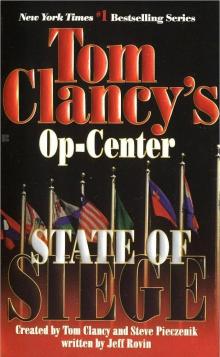 State of Siege o-6
 Debt of Honor jr-6
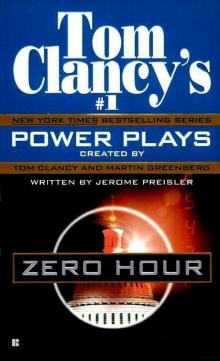 Zero Hour pp-7
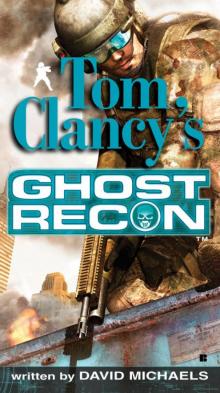 Ghost Recon gr-1
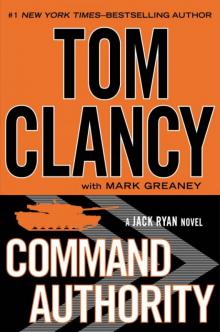 Command Authority jr-10
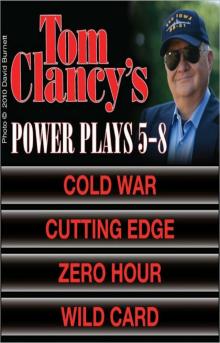 Tom Clancy's Power Plays 5 - 8
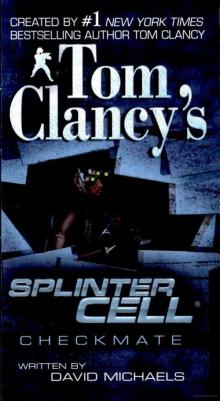 Checkmate sc-3
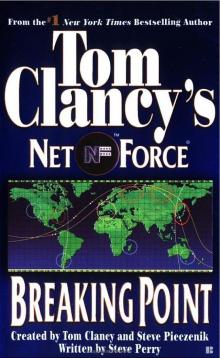 Breaking Point nf-4
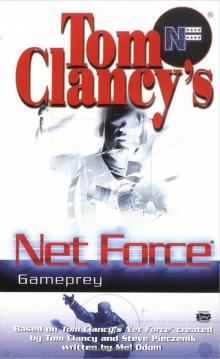 Gameprey nfe-11
 The Hunted e-2
 Hidden Agendas
 Divide and Conquer o-7